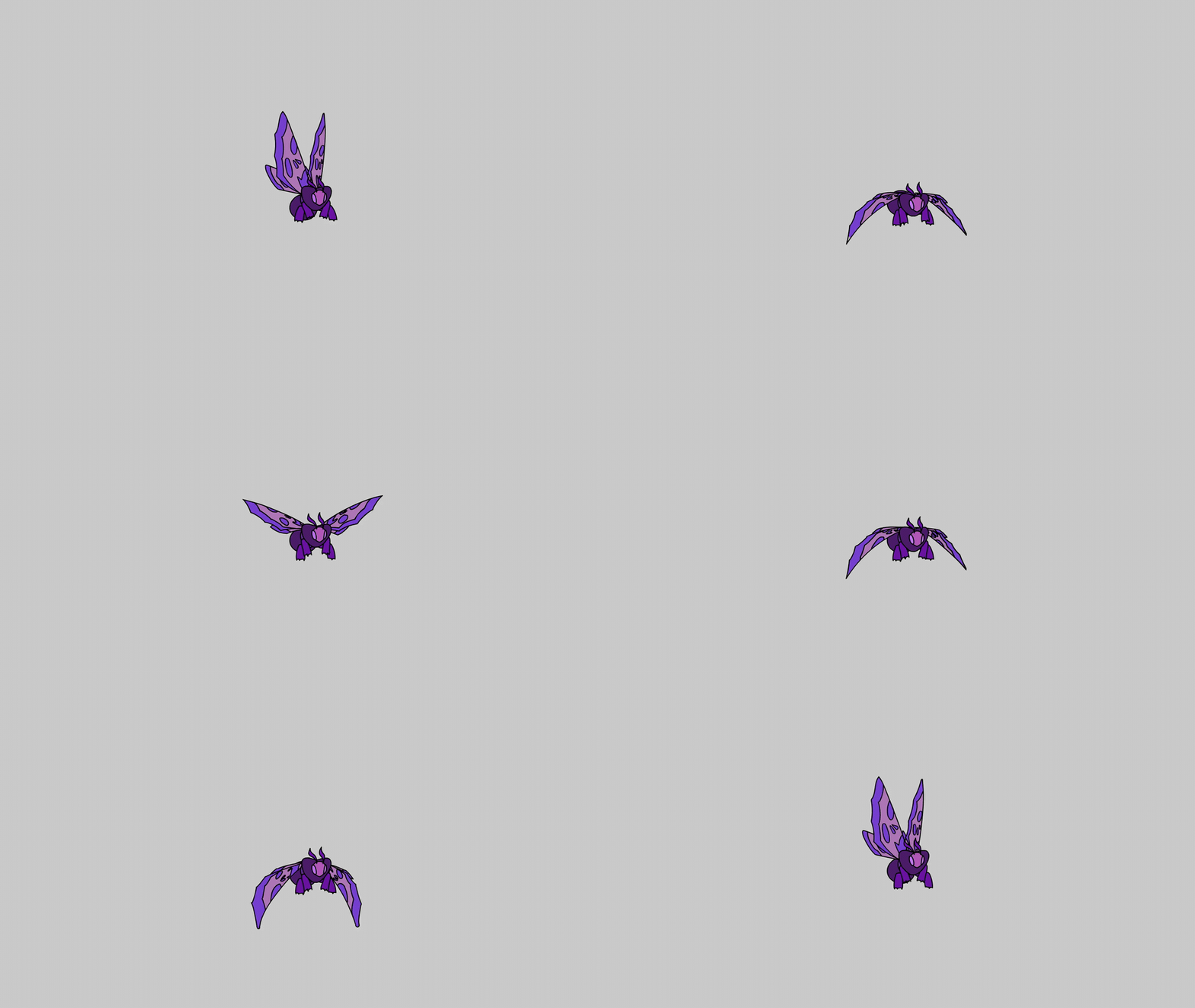
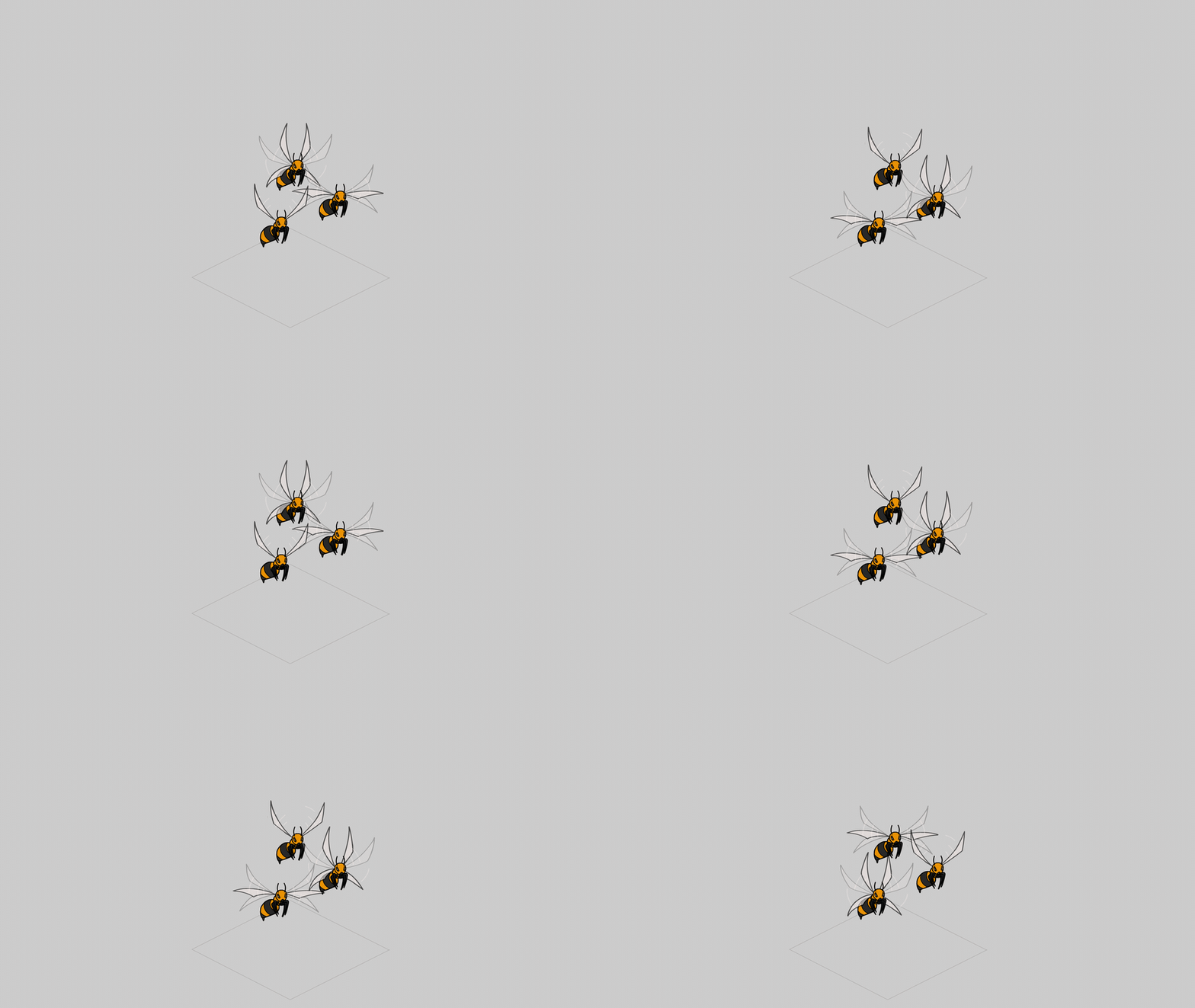

We’ve been making progress on a group of flying enemies that players may encounter in Everlasting Odyssey. This update focuses on one purple Moth and two yellow-and-black Wasp variations. The art is still in development, but these clips give us a useful look at how each creature moves before it is placed back into a battle.
At this stage, the plain grey background is useful rather than glamorous. It removes terrain, lighting, combat effects, and interface elements from the picture, making it easier to watch the outline of the creature, the path of the wings, and the way the body shifts through the loop. If something jumps or loses its shape, there is nowhere for it to hide.
One of the technical checks we are making is how each animation returns to its starting pose. These clips repeat quickly, so a small mismatch at the end can turn into a noticeable hitch after several cycles. Watching a loop once is rarely enough. Playing it repeatedly makes changes in spacing, timing, and silhouette much easier to catch. That is a useful test for any repeating game animation: judge the rhythm over many cycles, not only the first one.
We also review the enemies at the size players are likely to see during a turn. A full-screen export can make every line look clear, while the same drawing may become muddy when it is reduced to the game camera. Checking the animation at gameplay scale early helps reveal whether the body remains readable, whether the wings blend together, or whether the motion depends too much on details that will barely be visible in play.
The two Wasp clips are separate variations, and neither is being discarded. Keeping both means they should feel related without becoming indistinguishable. Their shared colours and overall shape establish the enemy family; our review is whether the differences still register when the animations are viewed side by side at battlefield scale. This is another reason to test variations in context rather than judging each asset alone at full resolution.
Animation also has to work alongside the information already on screen. During an Everlasting Odyssey battle, the player may be reading the grid, turn order, movement range, party resources, and the expected result of an action. As we discussed in our battle forecast update, clarity matters before the player commits to a decision. Enemy movement can add life and character, but it should not make the tactical state harder to follow.
The next step is to place the Moth and both Wasp variations back into an encounter with terrain, party members, and the combat interface around them. That will show us which parts of the motion survive the transition from an isolated test to the game itself, and where timing or drawings may need another pass. These are current animation tests rather than an announcement of final action names, abilities, or combat roles.
We’ll share more as these enemies move through development. You can follow the development log for future Everlasting Odyssey progress updates.